
Can the structural integrity of a longitudinal research study be preserved through the precise application of a 0.9% benzyl alcohol concentration? Within the rigorous framework of UK laboratory environments, the maintenance of aseptic conditions during multi-dose reagent withdrawal remains a critical concern, and researchers often find that the bacteriostatic water 10ml vial is essential for maintaining sample purity over extended durations. Academic consensus suggests that the risk of microbial proliferation in aqueous solutions can invalidate experimental data, a challenge familiar to those managing complex laboratory inventories. This technical analysis provides a comprehensive evaluation of the chemical composition, pH stability, and the specific antimicrobial mechanisms that differentiate bacteriostatic solutions from standard sterile water. By adhering to the evidence-based protocols outlined herein, laboratory professionals can establish robust handling procedures that align with UK research integrity standards. The subsequent sections review the molecular properties of the benzyl alcohol additive, the 28-day shelf-life constraints following initial vial entry, and the specific requirements for sourcing UK-compliant reagents for precision-based in-vitro applications.
Key Takeaways
- Detail the precise chemical specification of the bacteriostatic water 10ml vial, specifically the 0.9% benzyl alcohol concentration required for inhibiting microbial proliferation in multi-dose applications.
- Distinguish between bacteriostatic and bactericidal mechanisms to ensure the structural integrity of longitudinal research and the maintenance of aseptic conditions.
- Evaluate the comparative functional utility and cost-efficiency of multi-dose bacteriostatic preparations against single-use sterile water diluents within UK laboratory settings.
- Establish rigorous aseptic handling protocols, including the mandatory sanitisation of vial stoppers with 70% isopropyl alcohol to mitigate the risk of cross-contamination.
- Define the procurement standards for UK research environments, focusing on the selection of specialist reagent suppliers that maintain strict adherence to laboratory-only classifications.
Chemical Composition and Technical Classification of 10ml Bacteriostatic Water
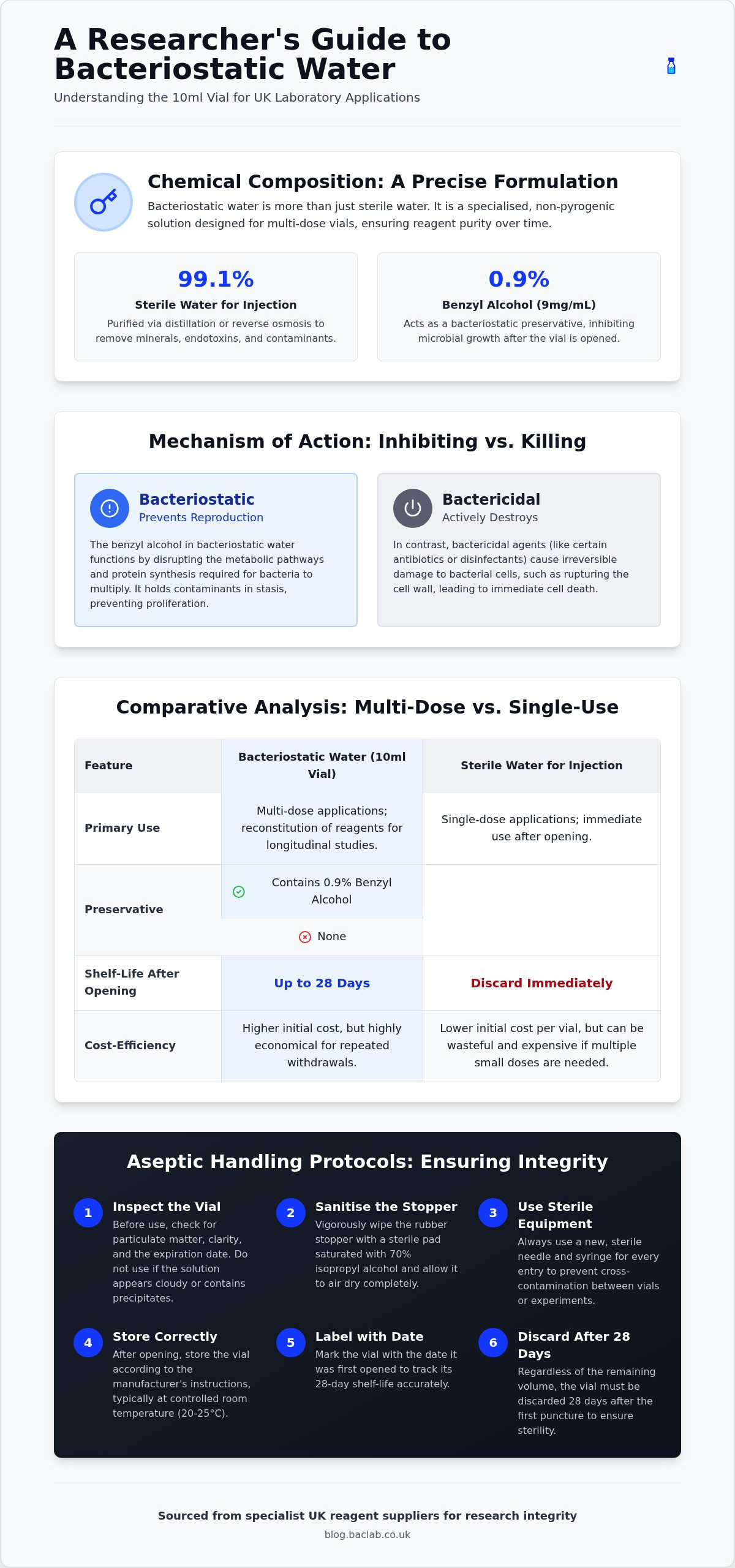
Bacteriostatic water is defined as a sterile, non-pyrogenic preparation of water for injection, specifically formulated for the reconstitution and dilution of laboratory reagents. Unlike standard sterile water, which is intended for single-use applications, the bacteriostatic water 10ml vial contains a precise concentration of benzyl alcohol to facilitate multiple entries. This preparation must adhere to stringent pharmacopoeial standards to ensure that the introduction of atmospheric or surface-level micro-organisms doesn’t lead to exponential bacterial growth. The technical utility of the 10ml format is found in its capacity to balance volume requirements with chemical stability; it provides sufficient quantity for iterative research protocols whilst minimising the volume of reagent that must be discarded after the established 28-day shelf-life.
The Role of 0.9% Benzyl Alcohol as a Preservative
The inclusion of 0.9% (9mg/mL) benzyl alcohol is the established industry standard for inhibiting the metabolic activity of bacteria. As a Bacteriostatic agent, benzyl alcohol functions by preventing the reproductive cycle of micro-organisms rather than inducing immediate cell death. This distinction is vital for maintaining the biochemical integrity of the dissolved solute. Benzyl alcohol serves as a bacteriostatic agent by disrupting the cellular membranes of potential contaminants without altering the chemical properties of the primary reagent. The 0.9% concentration is selected because it provides a robust antimicrobial barrier without reaching levels that would interfere with the molecular stability of sensitive research compounds. The solution is typically pH-balanced amongst a range of 4.5 and 7.0, a specification that ensures compatibility with a broad spectrum of pH-sensitive laboratory reagents.
Solvent Properties and Aqueous Purity Standards
Aqueous purity in a bacteriostatic water 10ml vial is achieved through rigorous distillation or reverse osmosis processes designed to eliminate dissolved solids, minerals, and organic matter. These contaminants are problematic in laboratory settings because they can act as catalysts in unintended chemical reactions or interfere with the precision of biochemical assays. Non-pyrogenic certification is a mandatory requirement for these solutions, indicating the absence of bacterial endotoxins that could trigger inflammatory responses in in-vitro models. By ensuring the water is free from metabolic by-products and inorganic ions, researchers can maintain the reproducibility of their data. This high-purity environment is essential for the long-term storage of reconstituted compounds, where even trace impurities could lead to accelerated degradation or precipitation of the solute. Researchers seeking a detailed regulatory framework for evaluating these specifications should consult the comprehensive guidance on bacteriostatic water purity standards as defined by the European Pharmacopoeia and British Pharmacopoeia requirements.
Mechanism of Antimicrobial Action in Multi-Dose Research Vials
The efficacy of a bacteriostatic water 10ml vial in a research setting is contingent upon the specific antimicrobial dynamics of its preservative. A fundamental distinction exists amongst bactericidal and bacteriostatic mechanisms. Bactericidal agents induce the irreversible destruction of bacterial cell walls or DNA, leading to immediate lysis. In contrast, bacteriostatic agents focus on the inhibition of protein synthesis or the metabolic pathways required for cellular division. By arresting the reproductive cycle, the preservative ensures that any micro-organisms introduced during a puncture event cannot reach a threshold that would compromise the reagent. Every entry into the vial via a needle introduces a statistical risk of microbial inoculation, making the presence of 0.9% benzyl alcohol a necessary safeguard for longitudinal studies.
It is critical to recognise that bacteriostatic water is not a self-sterilising solution. If a vial is heavily contaminated or if the initial reagent is non-sterile, the preservative cannot “clean” the liquid. It merely maintains the status quo by arresting the growth of low-level contaminants. Consequently, the use of a preserved diluent does not negate the requirement for strict aseptic technique. Researchers must continue to operate within a laminar flow hood or utilise sterile handling protocols to ensure that the initial microbial load remains below the inhibitory capacity of the benzyl alcohol.
Inhibiting Microbial Proliferation Amongst Laboratory Reagents
Benzyl alcohol targets the cytoplasmic membrane of common laboratory contaminants, such as Staphylococcus aureus and Pseudomonas aeruginosa. By increasing membrane permeability, the preservative disrupts the proton motive force and inhibits the uptake of essential nutrients. This metabolic interference effectively ceases bacterial replication. Researchers can review technical dossiers to better understand how these inhibitory mechanisms support the longevity of reconstituted compounds. It’s important to understand that whilst the solution prevents the exponential growth of bacteria, it has limited efficacy against certain fungal spores or viruses, which necessitates careful environmental control during withdrawal.
Structural Integrity of the 10ml Glass Vial and Stopper
The physical architecture of the bacteriostatic water 10ml vial is as vital as its chemical composition. Type I borosilicate glass is the industry standard for these containers because it offers superior chemical resistance. This material prevents the leaching of alkali ions into the water, a process that could otherwise shift the pH or introduce inorganic impurities into the assay. The vial is sealed with a high-elasticity rubber stopper, typically composed of chlorobutyl or bromobutyl polymers, which are engineered for their self-sealing properties. These elastomers close immediately upon needle withdrawal, maintaining a mechanical barrier against atmospheric ingress. This system is further protected by an aluminium flip-off seal, which provides a tamper-evident layer and ensures the stopper remains sterile until the first point of access.
Comparative Analysis: Bacteriostatic vs Sterile Water for Injection
Selecting the appropriate aqueous diluent requires a precise understanding of the functional differences amongst sterile water for injection and bacteriostatic preparations. Sterile water for injection is a single-use reagent that contains no antimicrobial agents. Once the vial’s atmospheric seal is compromised, the solution is susceptible to rapid microbial colonisation, necessitating the immediate disposal of any remaining liquid. Conversely, the bacteriostatic water 10ml vial is engineered for multi-dose applications, utilising a 0.9% benzyl alcohol preservative to maintain solution integrity over a 28-day window. This distinction is not merely a matter of convenience; it represents a fundamental shift in laboratory logistics and experimental design. For researchers conducting longitudinal studies that require daily reagent aliquots, the multi-dose format provides a level of consistency that single-use vials cannot match.
Cost-efficiency is a significant factor for UK research institutions managing tight budgetary constraints. Utilising a 10ml multi-dose vial reduces the frequency of procurement and significantly lowers the volume of laboratory waste. When a protocol requires small, frequent volumes of a diluent, the cumulative cost of discarding unused sterile water becomes substantial. However, the decision to use a preserved solution must be weighed against the specific requirements of the analytical assay. Whilst the preservative is effective at inhibiting growth, its presence can interfere with certain high-sensitivity spectrophotometric readings or live cell culture environments where the alcohol may induce cytotoxic effects. Laboratories seeking a structured framework for these procurement decisions can consult the bacteriostatic water for biochemical research procurement guide, which provides a clinical analysis of diluent selection criteria for multi-dose protocol design.
Multi-Dose Versatility versus Single-Use Limitations
The 28-day in-use shelf life of bacteriostatic water offers a clear logistical advantage over the immediate disposal requirements of sterile water. In environments where high-throughput screening or repeated reagent reconstitution is the norm, the bacteriostatic water 10ml vial serves as a reliable reservoir. This reduces the administrative burden of inventory management and ensures that a sterile diluent is always available for immediate use. Furthermore, the reduction in waste generation aligns with the sustainability goals of modern UK laboratories, as it minimises the disposal of Type I borosilicate glass and packaging materials associated with single-use alternatives.
Impact on Lyophilised Protein and Peptide Stability
Benzyl alcohol is an effective preservative, but its solvent properties can influence the tertiary structure of sensitive biochemicals. In certain concentrations, the alcohol may interact with the hydrophobic regions of proteins, potentially leading to aggregation or partial denaturation. Before reconstituting a compound, researchers should consult the specific solubility and stability data for that solute. Whilst bacteriostatic water is the preferred diluent for multi-dose stability, researchers must verify that 0.9% benzyl alcohol does not denature the specific protein under investigation. If the target molecule is known to be sensitive to organic solvents, a single-use sterile water diluent may be the only viable option to ensure the accuracy of the experimental results.
Laboratory Handling Protocols and Storage Requirements
Adherence to rigorous handling protocols is essential to maintain the chemical and microbial stability of a bacteriostatic water 10ml vial within a laboratory setting. The primary objective of these procedures is to ensure that the 0.9% benzyl alcohol concentration remains effective at inhibiting microbial proliferation whilst preventing the introduction of exogenous contaminants. Before the initial breach of the aluminium seal, the vial’s integrity must be visually inspected for particulates or discolouration. Once the seal is removed, the chlorobutyl rubber stopper requires thorough sanitisation using a 70% isopropyl alcohol swab. This step is a mandatory requirement; the alcohol must be allowed to air-dry completely to facilitate the denaturation of adherent micro-organisms and the mechanical removal of surface contaminants. Documentation of the first-use date on the vial label is a critical administrative step, as the solution’s bacteriostatic efficacy is only validated for a 28-day duration following the initial puncture. Researchers seeking a rigorous scientific justification for this usage window and the specific degradation factors that affect preservative potency should consult the technical analysis of bacteriostatic water shelf life and stability, which examines the impact of thermal fluctuations and environmental variables on reagent longevity.
Aseptic Withdrawal Techniques and Puncture Management
Precision during the withdrawal process is necessary to prevent the physical degradation of the vial’s components and the compromise of the reagent. Researchers should employ the “air-replacement” method to equilibrate internal pressure. This involves drawing a volume of air into the syringe equal to the intended reagent volume and injecting it into the vial before withdrawal. This technique prevents the formation of a vacuum that could impede fluid flow or cause unfiltered atmospheric air to be drawn into the vial. To mitigate the risk of “coring”-a phenomenon where a hollow needle shears off a fragment of the rubber stopper-the needle should be inserted at a 45-degree angle with the bevel facing upwards before being brought to a vertical position. Under no circumstances should unused solution be returned to the original 10ml vial, as this practice introduces an unacceptable risk of cross-contamination and reagent degradation.
Temperature Regulation and Shelf-Life Parameters
The chemical stability of the aqueous solution is highly dependent on controlled environmental variables. Standard storage temperatures for a bacteriostatic water 10ml vial are maintained amongst 20°C and 25°C. Storing the solution at lower temperatures, specifically freezing, is contraindicated for research purity. Freezing can induce the precipitation of benzyl alcohol, thereby reducing the effective concentration of the preservative and compromising the solution’s antimicrobial capacity upon thawing. Additionally, light exposure should be minimised to prevent the photo-oxidation of the preservative into benzaldehyde or benzoic acid, which may shift the pH and interfere with sensitive biochemical assays. UK research institutions can procure high-purity laboratory reagents that meet these rigorous technical specifications through specialist suppliers. After the 28-day window has elapsed, the vial must be discarded according to institutional hazardous waste protocols, regardless of the remaining volume, to ensure experimental reproducibility.
Procurement Standards for High-Purity Bacteriostatic Water in the UK
Identifying a reliable supplier in the United Kingdom requires a thorough assessment of their inventory specialisation and their adherence to the “Research Use Only” (RUO) designation. A reputable supplier must provide transparent access to technical data and maintain a clear separation from the distribution of prescription medications or prohibited substances. Sourcing a bacteriostatic water 10ml vial from a specialist reagent provider ensures that the product has been stored and handled within a dedicated facility, reducing the risk of cross-contamination associated with generalist warehouses that manage diverse product categories. For university and private research institutions, the presence of UK-based stock is a critical factor for maintaining consistent supply chains; it eliminates the complexities of international customs and ensures that experimental timelines aren’t compromised by logistical delays. This domestic availability also facilitates a more reliable chain of custody, which is vital for maintaining the non-pyrogenic certification required in sensitive biochemical assays. Procurement teams should also familiarise themselves with the applicable bacteriostatic water purity standards under the European Pharmacopoeia to ensure that sourced reagents meet the bacterial endotoxin thresholds mandated for UK research environments.
Evaluating Specialist Reagent Suppliers vs Generalist Outlets
Specialisation in the provision of laboratory diluents leads to more robust quality control protocols and a deeper level of technical support for the end-user. Generalist outlets often lack the specific biochemical expertise required to address nuanced queries regarding pH stability or preservative interactions. Specialist suppliers prioritize the integrity of their 10ml vials by maintaining precise environmental controls and providing detailed chemical specifications, such as the exact concentration of benzyl alcohol and the pH range of the solution. These organisations typically offer structured bulk discounts; these financial frameworks are essential for the effective management of institutional research budgets. This allows for the procurement of high-volume wholesale bundles without compromising on reagent purity or supply-chain transparency, ensuring that researchers have access to consistent batches for longitudinal studies.
BacLab’s Technical Specifications for 10ml Research Vials
BacLab remains committed to providing 10ml bacteriostatic water vials that meet the stringent requirements of precision-based in-vitro research. The 10ml format is specifically selected to facilitate high-throughput protocols whilst minimising the volume of reagent that exceeds the 28-day shelf-life limit. For facilities with high consumption rates, the availability of wholesale bundles and bulk discounts provides a scalable procurement solution that aligns with the logistical needs of modern UK laboratories. Researchers and laboratory managers can access the primary procurement page to review current technical data and establish a consistent supply of UK-compliant reagents. By focusing exclusively on laboratory-grade diluents, the supplier ensures that the technical needs of the researcher remain the priority, avoiding the distractions of adjacent, non-research markets.
Advancing Experimental Precision through Standardised Reagent Protocols
The technical utility of the bacteriostatic water 10ml vial is predicated on its capacity to maintain aqueous purity within complex multi-dose research frameworks. By integrating 0.9% benzyl alcohol, these preparations offer an essential antimicrobial barrier that supports the reproducibility of longitudinal data. Adherence to established aseptic withdrawal techniques and strict 28-day disposal cycles remains mandatory for preserving the molecular integrity of reconstituted solutes. These protocols ensure that microbial proliferation doesn’t compromise the validity of sensitive biochemical assays or experimental outcomes.
Research institutions must prioritise procurement from suppliers that demonstrate a dedicated focus on laboratory-grade reagents. BacLab operates as a specialist UK-based supplier, ensuring that all inventory is managed within a strictly controlled environment for laboratory and research applications. This commitment to technical transparency allows laboratories to maintain consistent supply chains through wholesale bundles and bulk discounts. Procure high-purity bacteriostatic water 10ml vials from BacLab to ensure that the focus remains on the accuracy of the experimental outcome rather than the variability of the diluent. Maintaining these rigorous standards facilitates a more disciplined approach to laboratory management and research integrity.
Frequently Asked Questions
What is the exact composition of a bacteriostatic water 10ml vial?
The standard composition of a bacteriostatic water 10ml vial consists of high-purity, sterile water for injection integrated with 0.9% (9mg/mL) benzyl alcohol. This specific concentration serves as a preservative to inhibit microbial growth. The solution is typically non-pyrogenic and maintains a pH range amongst 4.5 and 7.0. These technical specifications ensure that the diluent doesn’t compromise solute stability whilst meeting stringent aqueous purity standards for professional laboratory environments.
How does bacteriostatic water differ from sterile water for injection?
The primary distinction lies in the inclusion of an antimicrobial preservative. Sterile water for injection contains no additives and is strictly for single-use applications; any remaining liquid must be discarded immediately after the seal’s breached. In contrast, bacteriostatic water contains benzyl alcohol, which facilitates multiple entries from the same vial over an extended period. This multi-dose capability provides significant logistical advantages and cost-efficiency for longitudinal research projects requiring frequent, small-volume aliquots.
How long is a 10ml bacteriostatic water vial stable after the first puncture?
A bacteriostatic water 10ml vial is validated for stability for exactly 28 days following the initial puncture of the rubber stopper. After this duration, the antimicrobial efficacy of the benzyl alcohol won’t be guaranteed, increasing the risk of microbial proliferation. Researchers must document the date of first entry on the vial label to ensure compliance with laboratory safety protocols. Any solution remaining after the 28-day window’s elapsed should be discarded. For a detailed examination of the chemical and environmental factors that govern this bacteriostatic water shelf life window, researchers should consult the relevant technical dossiers on preservative degradation and stability parameters.
Can bacteriostatic water be used for all types of laboratory reconstitution?
Bacteriostatic water isn’t universally compatible with all biochemical solutes. Whilst it’s ideal for many research compounds, the presence of benzyl alcohol can induce the denaturation of certain sensitive proteins or interfere with specific analytical assays. It’s also contraindicated for use in live cell cultures where the alcohol concentration may be cytotoxic. Researchers should verify the chemical compatibility of their specific solute with a 0.9% benzyl alcohol solution before commencing any reconstitution protocol.
What are the storage temperature requirements for 10ml vials in the UK?
Standard storage protocols for bacteriostatic vials in the UK dictate a temperature range amongst 20°C and 25°C. Controlled room temperature’s necessary to maintain the solubility of the preservative and the overall chemical stability of the preparation. Vials should also be stored away from direct light to prevent the photo-oxidation of the benzyl alcohol. Deviations from these environmental parameters can lead to the degradation of the antimicrobial agent and compromise the reagent’s purity.
Why is 0.9% benzyl alcohol used instead of other preservatives?
The 0.9% concentration of benzyl alcohol’s the established industry standard because it effectively inhibits the reproductive cycles of common contaminants without inducing immediate cell lysis. This bacteriostatic mechanism’s preferred over more aggressive bactericidal agents as it’s less likely to alter the molecular structure of the primary research compound. It provides a robust antimicrobial barrier that’s sufficient for multi-dose access whilst maintaining the chemical neutrality required for precise biochemical observations and data collection.
Is it possible to freeze bacteriostatic water for long-term storage?
Freezing bacteriostatic water’s generally contraindicated for laboratory use. Low temperatures can cause the benzyl alcohol to precipitate out of the aqueous solution, creating visible particulates and reducing the effective concentration of the preservative. Once the preservative’s precipitated, its antimicrobial efficacy’s significantly compromised even after thawing. To ensure the integrity of the reagent, vials should remain at room temperature and shouldn’t ever be subjected to sub-zero storage conditions that might degrade the solution.
Where can UK-based researchers source wholesale bacteriostatic water?
UK-based researchers can source high-purity reagents directly from specialist suppliers like BacLab. As a dedicated provider of laboratory diluents, BacLab offers individual 10ml vials as well as wholesale bundles with structured bulk discounts to accommodate institutional requirements. Sourcing from a specialist ensures that the product’s managed within a professional supply chain that adheres to laboratory purity standards. These reagents aren’t intended for medical or human application and are strictly for in-vitro research.